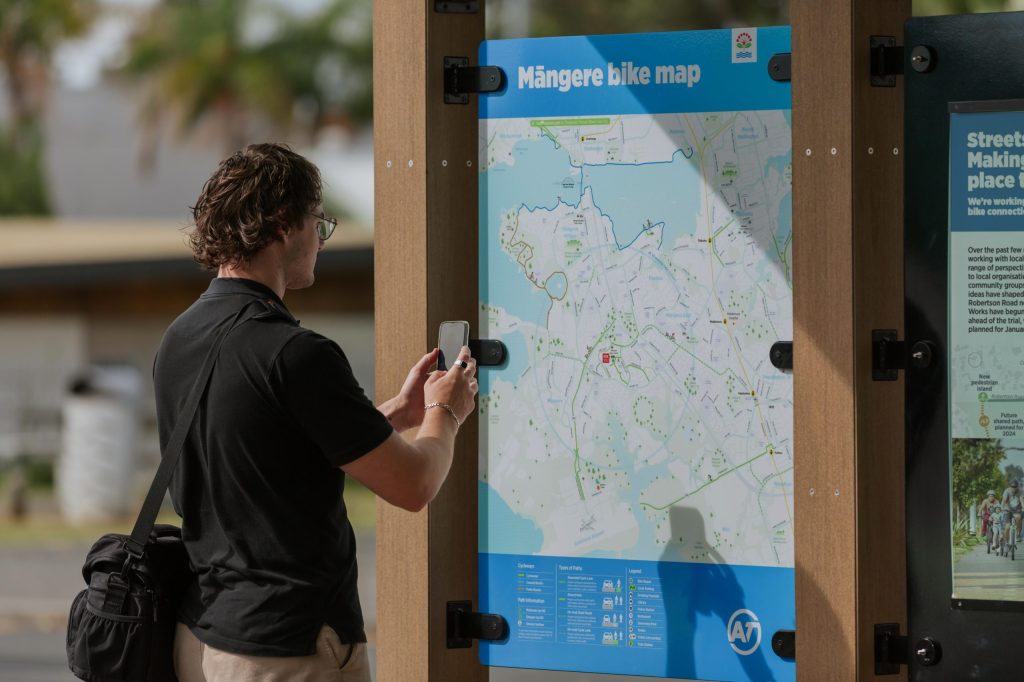
I was recently asked by Design Assembly to contribute to their ‘Five Minutes’ interview series —
It was a nice motivation to reflect. One point I made was around the use of AI in content generation:
Exercise your writing muscles. Try not to use AI for text generation. Writing and rewriting helps form your own process of thinking and working out a problem.
Similar to how teaching an idea helps you retain it, I guess. But in addition to this notion of creating = deeper thinking, there’s another element of AI generation that I (sometimes quite viscerally!) do not like.
Write me a story where...
Make an image of...
Make a map that...
Find open conjectures in maths and...
It’s the end-to-end outsourcing of thinking, I think. Though I find it difficult to exactly, and consistently, articulate why or what I don’t like about it. Codex, with 5.6 Terra and Sol, has become an invaluable part of my workflow in data-driven mapmaking. I use it a tonne, and perhaps I’m grandstanding to denounce other uses because they are ‘end-to-end’.
Last week I was at the New Zealand Cartographic Society’s national conference: GeoCart’2026. Many talks were given about “Geo-AI” and AI generated maps. At the conclusion of one of these talks, an attendee reflected on the film Her, saying that he found Joaquin Phoenix’s character to seem rather “pathetic”. “We have to make sure that we don’t become pathetic”, he said.
There’s plenty of philosophising on the use of generative AI in creative fields (in which I include maths), too, so I doubt these paragraphs are doing anything new..! In any case, it’s a nice excuse to post something again on this website. I hope to be a bit better at keeping it alive.
P.S. See more wicked images by Celeste Fontein, like the ones in the Design Assembly article, here of our Auckland micromobility work.
P.P.S. I thought that this AI-assisted maths result was interesting. Adjacent to what I was looking at on topos theory in my honours year.
